

The Toy Stethoscope on My Nightstand, and the Honey Spoon Beside It
A retired school nurse who listened to children's chests for 31 years starts writing down her own mornings, beside a sister-in-law's bottle of herbal syrup. The label, the honest research and the refund terms, read line by line.

First, the people: Corinne Tillman is a pen name. Bernie, Gene, Theo and the Coshocton kitchen are composites, the way family columns have always been written.
Everything about the syrup itself, its label, its price, its directions, its reviews and its refund terms comes from the seller's own pages, read in October 2026.
 The Nurse's Notebook
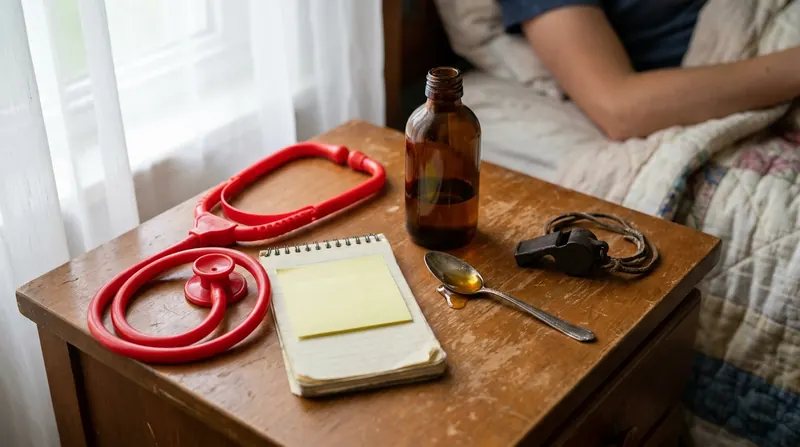
There's a yellow sticky note on the bathroom mirror every morning now. Today's says, in my school-office printing: "Chest: snug.
Stairs: one stop. Whistle: four."
I write it before I brush my teeth. It's the first thing I do, the way I used to check the sign-in sheet before the first bell.
It started on a Tuesday in January, when my grandson Theo, who is seven, climbed onto my lap with a red plastic stethoscope from a doctor kit and said, "Grandma, let me listen to you."
He put the little bell on my sweater, frowned the way he's seen grown-ups frown, and announced, "You sound like the radiator."
I laughed so hard I had to clear my throat three times. And then I noticed I'd been clearing it like that every morning for about two years, and I'd never once written it down.
I'm sixty-seven. For thirty-one years I ran the health office at an elementary school in Coshocton, Ohio, the little room with the cot, the ice packs and the sign-in sheet.
I listened to more small chests than I can count. And sitting with Theo on my lap, I understood that I had never listened to my own with half the attention I gave a second grader's.
So this is a column about a notebook. It's the small spiral kind that fits in a cardigan pocket, the kind I kept by the cot for three decades and never once used for myself.
It's also about my sister-in-law Bernie, an amber bottle she set on my counter in February, my grandfather's honey spoon, and what the notebook said after twelve weeks.
If you've ever heard your own breathing on the cellar stairs and pretended you didn't, you'll know most of this already. You just haven't seen anybody write it down.
Thirty-One Years of Listening to Other People's Chests
A school health office is not a hospital ward. It is a cot with a paper sheet, a drawer of ice packs, a box of tissues and a line of children who mostly want to go home.
I loved it anyway. I loved the moment a frightened first grader stopped crying because somebody had finally listened to them properly.

The job teaches you one lesson above all the others. A chest on one day tells you very little; the same chest compared with last week tells you a great deal.
A child who coughs once in the hallway is a child in a hallway. A child who coughs every morning at 8:40, right after the bus, is a phone call to a parent before lunch.
I made a lot of those calls. I was the woman in the little room by the gym who noticed when a child's mornings had been changing for a month, and who said so gently.
I kept a stethoscope around my neck for all thirty-one years. It wasn't fancy, a gray one with a cracked earpiece I taped twice, and it heard everything that walked through that door.
Here's the embarrassing part. My own mornings had been changing for longer than a month, and I'd been filing them under "weather" and "getting older."
The first entry I ignored was the throat-clearing. Every morning, between the coffee and the newspaper, I'd clear my throat four, five, six times, a little dry tickle that I blamed on the furnace.
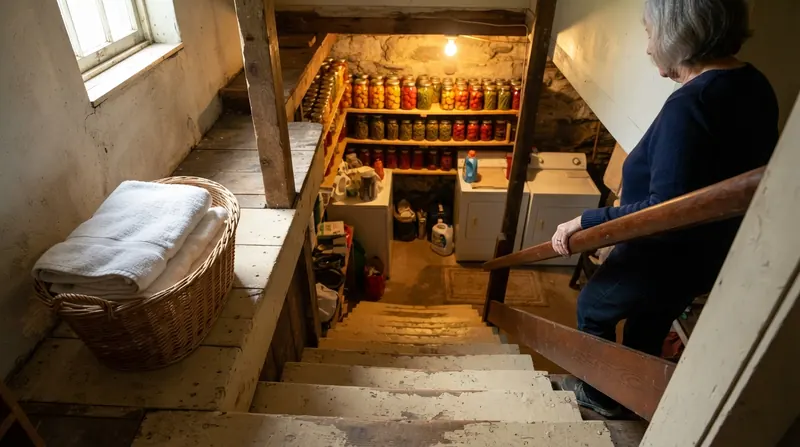
The second entry was the cellar stairs. Our house has fourteen wooden steps down to the laundry, and somewhere in the last two years I'd started stopping on the sixth one with a hand on the rail.
The third entry was the whistle. I'll get to the whistle.
I'd have caught all three in a fourth grader in a single morning. In my own kitchen, I needed a seven-year-old with a plastic stethoscope to point them out.
The Cough I Carried for Years, and the Day I Put It Down
I should tell you something about myself, because it matters to the rest of this. I smoked for fourteen years.
I started in nursing school in 1977, like half my class, on the back steps of the hospital between shifts. Menthols, because we thought they were gentler.
I quit in 1991, the August before I started at the elementary school. I couldn't bear the idea of a child smelling it on my cardigan when I bent down to listen to them.
I wish I could tell you it was easy. It wasn't, and I won't pretend it was, but I did it, and I've been proud of it every single day for thirty-four years.
What I didn't know then, and what nobody told me, is that you carry the memory of a habit in your chest for a long time. The cough I had in those years left early, but the mornings never quite forgot it.
In my forties I'd have a stubborn tickle every winter. In my fifties it lasted a little longer into spring.
By my sixties, the morning throat-clearing was just part of the house, like the furnace ticking on.
Gene, my husband, never smoked a day in his life. He was a rural mail carrier for thirty-three years, and he likes to say his lungs are "full of Ohio air and nothing else."
He's the one who first noticed the stairs. "You stopped again," he said one night in November, from the top of the cellar steps, holding a basket of towels he'd offered to carry.
I told him I was looking at the shelf of canning jars. He's been married to me for forty-four years, and he didn't believe me for a second.
A Cast-Iron Whistle on a Leather Cord
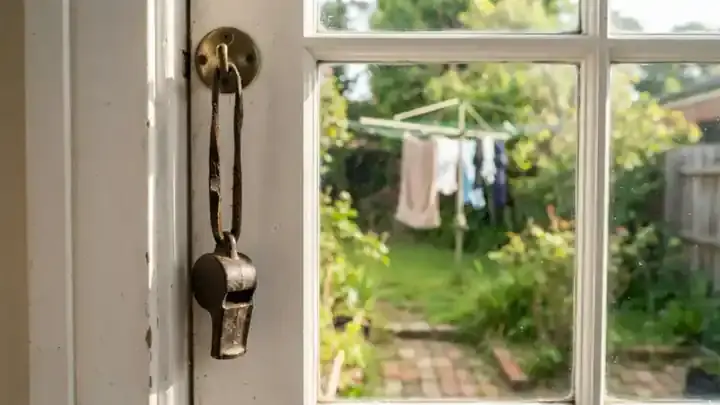
Now the whistle. On a hook by my back door hangs a cast-iron whistle on a cracked leather cord, older than I am, heavy enough to use as a paperweight.
It was the school's recess whistle when I started in 1991. The gym teacher retired the year after and handed it to me, saying the health office needed a way to stop a game of tag in an emergency.
I blew that whistle at recess duty for three decades. One long blast meant "freeze," two short ones meant "line up," and every child in Coshocton knew the difference.
When I retired, the principal had it cleaned and gave it back to me on the cord in a little box. I hung it by the back door and didn't touch it for three years.
The week after Theo's verdict of "radiator," I took it off the hook. I blew one long note and counted in my head, the way I used to count a child's breaths with a watch.
Four seconds. I tried it again and got four and a half.
I have no idea what that number means medically, and I want to be honest that it probably doesn't mean much. A whistle is not a test anyone would order.
But in 1995 I could freeze an entire playground for a count of eight without thinking about it. Four is a number you notice when you used to have eight.
So I did what I did with every worrying thing a child brought into my office. I took out a fresh spiral notebook and wrote the date at the top of the page.
What My Nurse Practitioner Listened To
I'd been putting off my annual checkup since October. Nurses are famously bad patients, and retired nurses are worse, because we think we already know what we'll be told.
Renata has been my nurse practitioner for nine years. She's a tall, unhurried woman who warms the bell of her stethoscope in her palm before she puts it on your back, which tells you everything.
I brought the notebook. She read the first page, looked at me over her glasses, and said, "You've been keeping notes on yourself like a school nurse."
"I am a school nurse," I said. "Retired."
She listened for a long time, front and back, the way I used to with a child who'd come in twice in one week. Deep breath, again, cough for me, again.
"Your chest sounds clear, Corinne," she said finally, hanging the stethoscope around her neck. "I'm not hearing anything that worries me today."
Then she said the sentence I've thought about every day since. "But you're sixty-seven, you smoked for fourteen years, and you sit more than you used to.
You're working harder on those stairs than you need to."
She gave me three instructions, and I wrote them inside the back cover of the notebook in pen. Walk every day, outside if the weather lets you. Keep the house air moist in winter. Come back in the spring with your notebook.
I asked her, as every patient does, whether there was anything I should take. She smiled the way I used to smile at parents who asked me the same question.
"Nothing I'd hand you for a chest that sounds clear," she said. "Warm drinks.
A spoon of honey for that tickle if you like, people have done that for centuries. And bring me the notebook."
I drove home past the high school with the notebook on the passenger seat. I'd spent thirty-one years being the person who listened, and for the first time in a long while, somebody had listened to me.

So? What did Renata say? Theo keeps asking if Grandma's radiator is fixed
6:12Chest sounds clear. I'm to walk every day and bring my notebook back in spring.
6:15A notebook. Of course there's a notebook
6:16Tell Theo his stethoscope found something worth writing down. He gets the credit.
6:18A Pan of Water on the Radiator
Renata's second instruction was the one I'd given to a thousand parents myself. Keep the house air moist in winter.
I'd simply never applied it to my own house.
Our house was built in 1924, and it has the original cast-iron radiators that clank like a freight yard every November. They also dry the air until the wallpaper curls at the seams.
My mother kept an enamel pan of water on the living room radiator every winter of my childhood. I'd forgotten that until I stood in the hallway and looked at the bare radiator under the window.
So I went to the cellar, stopped on step six, and found her old white enamel pan with the chipped blue rim. It had been holding clothespins since 1990.

Gene bought a small hardware-store humidifier for the bedroom the same week. It hums like a refrigerator, and he says it's the most romantic gift he's given me since 1981.
I also did something I'd been avoiding for years. I cleaned out the sewing room in the cellar, where three decades of fabric scraps and dust had settled like snow.
Bernie came over to help and wore a bandana over her nose like a bank robber. We filled nine garbage bags and found a box of my mother's quilt squares from 1956.
None of this is exciting. But a school nurse knows that the dull things done every day matter more than the exciting thing done once.
Air, water, walking, dust.
The walking was the hardest part at first. The first morning, I made it to the end of Walnut Street, about a third of a mile, and I was glad no one was watching me catch my breath at the stop sign.
By the end of February I could do the loop around the park. By the end of March Gene started coming with me, and we began taking his old mail route on Saturdays, two point one miles exactly.
He knows every mailbox on it. He tells me who used to get the seed catalogs and who used to get the letters from the Navy, and I've learned more about my own town in one spring than in sixty-seven years.
My Grandfather's Honey Spoon
"A spoon of honey for that tickle." On the drive home, that one line sent me straight back to 1962 and my grandfather's kitchen in Dresden, Ohio.
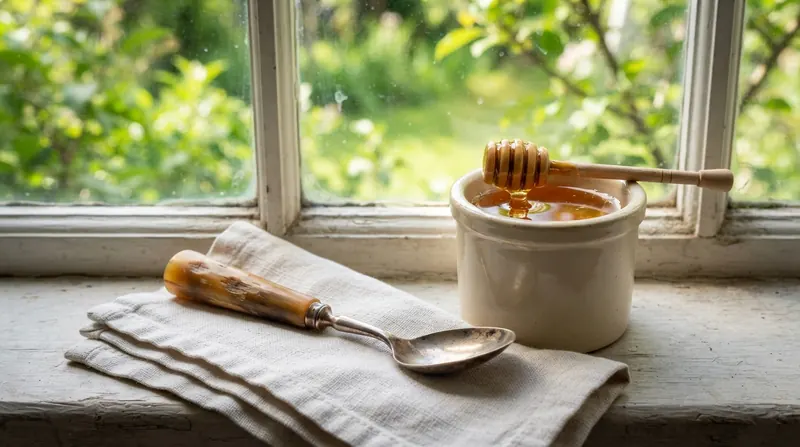
Grandpa Amos worked thirty years at the pottery and smoked a pipe until the day he died. Every night before bed he took one teaspoon of clover honey from a crock on the windowsill.
He had a particular spoon for it, a little horn-handled teaspoon worn thin on one side. Nobody else was allowed to use it, and as a child I thought that was the most serious rule in the world.
"For the pipes," he'd say, tapping his chest. Then he'd let the honey sit on his tongue for a long moment before swallowing, eyes closed, like a man saying grace.
When Grandma passed in 1988, my mother gave me that spoon in an envelope with no note. It has lived in the back of my silverware drawer for thirty-seven years.
That night, I found it. I held it under the kitchen light and thought about how many times I had told parents "a spoon of honey" without ever once doing it myself.
You can't hear a change you've never written down.
For three weeks, I did exactly what Renata told me. I walked to the end of Walnut Street and back every morning, and I put a pan of water on the radiator.
I ate a spoon of plain honey before bed, with Grandpa's spoon, mostly for the memory of it. And I wrote in the notebook every morning before brushing my teeth.
Some mornings the throat-clearing count was five, some it was seven. The stairs were the stairs, and the whistle stayed at four and a half.
I'd like to tell you that honey and a walk changed everything in three weeks. They didn't, and I'd be lying to you if I said so.
But three weeks of a notebook did change one thing: I stopped pretending. And that's when Bernie came over with the bottle.
Bernie Sets an Amber Bottle on My Counter
Bernadette Tillman is Gene's older sister, seventy years old, and she ran the paint counter at the hardware store on Main Street for twenty-eight years.
Everyone calls her Bernie. She can match any color you bring her by eye, she has never once knocked before entering my kitchen, and she has never once been wrong about a person.
She came in on a gray Thursday in February with a coffee cake and a paper bag. She set both on the counter, sat down in Gene's chair, and pointed at the notebook.
"Gene says you've started writing yourself up like one of your kindergartners," she said. "Good.
About time."
Then she took a small amber bottle out of the paper bag and stood it next to the coffee cake. "This is Lyle's," she said.
"Well, it's yours now. I bought two."
Lyle is Bernie's husband, seventy-three, a retired lineman who spent forty years on poles in every kind of Ohio weather. He also has the deepest morning throat-clearing of anyone I know.
"He takes a spoonful of it every day," Bernie said. "Morning, after lunch, before bed.
Says it's the only thing that tastes like his mother's kitchen."
I picked up the bottle and did what thirty-one years of reading permission slips and allergy forms have trained me to do. I turned it around and read the back before the front.
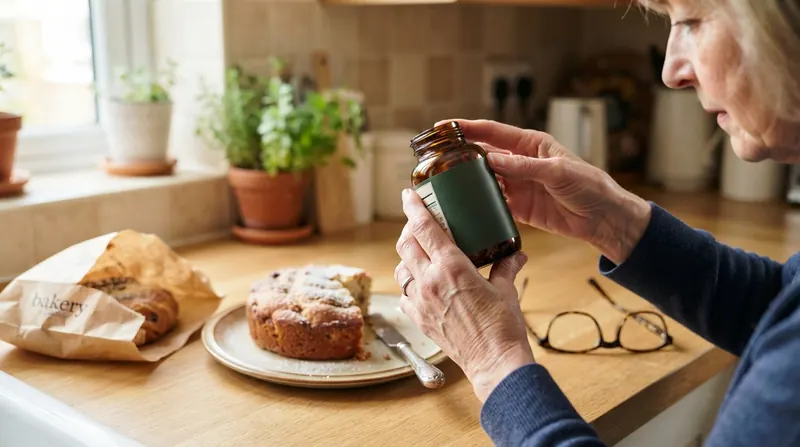
Bernie watched me read and laughed. "You haven't changed since 1979," she said.
"You read the back of the cereal box at our wedding breakfast."
"Somebody has to," I said.
The front of the bottle said Gaia Herbs, Bronchial Wellness Syrup, "with organic mullein, elecampane, & honey," and 5.4 fl oz. The back had the list I was looking for.
Before I tell you what was on it, I want to say plainly what I thought in that moment. I thought: a sister-in-law, a coffee cake and a bottle of syrup. Of course.
I've seen a hundred bottles like it come through a health office in a lunchbox. Most of them had a lot of promises on the front and very little on the back.
This one was the other way around. And Bernie had written something on a sticky note and pressed it to the cap.
I kept that sticky note. It's on the inside of my medicine cabinet door now, next to Grandpa's spoon, which lives in a juice glass on the shelf.
Did you read the whole back yet or are you still auditing it
8:51Twice. Honey, four plants, three oils, water and lemon. It's short. I like short.
8:53Told you. Lyle says hi and that it tastes like Christmas cough candy
8:54I'll start tomorrow. One teaspoon. Grandpa's spoon. It's going in the notebook.
8:56Reading the Back Before the Front
Here is the ingredient list exactly as the seller prints it. I'm going to go through it slowly, the way I went through a new student's health form every September.
Line one: honey. It's the first ingredient, and it appears twice, once on its own and once as the base of the herbal blend.
This is a honey syrup with herbs in it, not the other way around.
I want to stop on that for a moment, because the seller's page lists "Sugar" under "Does Not Contain," and I disagree with that line. Honey is sugar, the oldest kind there is.
That isn't a scandal, it's just a reading problem. They mean no added cane sugar.
But if you count carbohydrates, or someone in your house does, read the next part of this column before the first spoon.
Line two: plantain leaf. Not the banana-like plantain from the grocery store.
This is the broad flat leaf that grows in every Ohio lawn and every school playground I ever supervised.
Children used to bring it to my office crushed in their fists, because a grandmother had told them it was good for a bee sting. It's an old, old plant in folk use, and I'll be honest that I have no study about it to show you.
Line three: elecampane root. A tall yellow flower, the one on the front of the label, with a thick root that European herbalists have used around the chest for centuries.
Line four: mullein leaf and flower. Every farm kid in Coshocton County knows mullein: the tall fuzzy stalk by the fence line with the soft gray leaves, the one we called "cowboy toilet paper."
Line five: thyme. The same herb that's in my spice rack, the aerial parts meaning the leaves and stems above the ground.
Then three essential oils: eucalyptus, anise and lemon. That's the smell when you open it, Bernie's "Christmas cough candy."
Then water, and lemon juice concentrate "to preserve freshness."
That's it. Ten lines, every one of them a word a farmer's wife would recognize.
No dyes, no artificial sweeteners, nothing I needed a dictionary for.
What the label doesn't print is how much of each herb is in a teaspoon. Many herbal blends don't, and I'd rather a company told me that plainly than printed numbers I couldn't check.
What a Teaspoon of the Base Actually Is
Since honey is the first line, I looked it up the way I'd look up anything a parent asked me about: in a government table, not on a seller's page.
The USDA's food database lists honey at about 82 grams of carbohydrate per 100 grams, roughly 41 grams of that fructose and 36 grams glucose, with about 17 grams of water. [1]
A level tablespoon of plain honey weighs about 21 grams, so a teaspoon is about 7. A teaspoon of this syrup is honey plus herbs, water and lemon, so it's somewhat less than that. [1]
Three teaspoons a day is a small amount of sugar. It's less than a single cookie.
But it is sugar, and if you count it, count it.
Honey is the oldest sweet in the kitchen, and it's still a sweet.
My own rule, for what it's worth: I take it the way the label says and I don't add honey to my tea on the same days. Gene thinks this is excessive and I think he's welcome to his opinion.
What the Studies Say, and How Big They Are
Now the part nurses are trained to be stubborn about. I went looking for real research on the plants on that label, and here's what there is, at its real size.
Mullein first. The best thing I found is a 2021 review in the journal Biology that collected what's known about mullein, from old Spanish folk use to laboratory work. [2]
In plain words, the authors say mullein's leaves and flowers are full of mucilage, the slippery stuff that coats a scratchy throat. That's the old explanation for why people have used it for coughs and hoarseness. [2]
They also say, plainly, that most of what we know is tradition and laboratory work. There are few trials in people, and none of them tested this bottle.
Thyme next. Thyme has the longest official paper trail of anything on the label. The European Medicines Agency's herbal committee lists thyme as a traditional herbal product for coughs and colds. [3]
Thyme is listed as a traditional herbal medicinal product used for coughs associated with colds.
Its use is based on long-standing use rather than on clinical trials.
— European Medicines Agency, Committee on Herbal Medicinal Products, Its herbal monograph on thyme, summarized in plain words[3]
"Traditional" is an honest word in that sentence, and I respect it. A review of the research on thyme notes that the direct evidence in people comes from a few small trials of thyme combined with other plants. [3]
Eucalyptus. The oil's main compound is called cineole, or eucalyptol, and it's been studied for comfort in the airways in a handful of small clinical trials. [4]
Small is the important word. A few small trials is a reason to be curious, not a reason to believe a bottle will do any particular thing for you.
Elecampane. This is the one with the deepest history and the thinnest modern file. Herbal references describe centuries of folk use around coughs and the chest, and no modern human trials. [5]
Plantain, anise and lemon. These are on the label, they're familiar kitchen and garden plants, and I have no study to quote you about them in a syrup.
So I won't.
I want to underline that last line, because I've seen how advertisements around this kind of product are written. Nobody honest can promise you that a syrup will change how your chest feels on the stairs.
The seller doesn't promise it either. Its own description says the syrup is made "to help soothe the bronchial passages and support healthy mucous membranes," with an asterisk.
The asterisk goes to the standard line that the Food and Drug Administration hasn't evaluated the statement. I read every asterisk; it's a habit.
The page also describes it as helping "soothe throat due to occasional dry cough." That's a small, modest claim, the kind of thing my grandfather would have said about his spoon, and I can live with it.
How I Take It, and What It Tastes Like
I started on the first Monday in March. I'm going to describe exactly what I do, because the details are where a routine lives or dies.
Morning, after coffee. I shake the bottle, the label insists on it, because the oils and the honey like to separate a little between doses.
Then I pour one level teaspoon. Not Grandpa's spoon in the morning, just a measuring teaspoon from the drawer, because a teaspoon on a label means five milliliters and not "whatever spoon is closest."
After lunch, the second one. This is the easiest one to forget, so it lives next to the dish rack, and I take it while the dishwater runs.
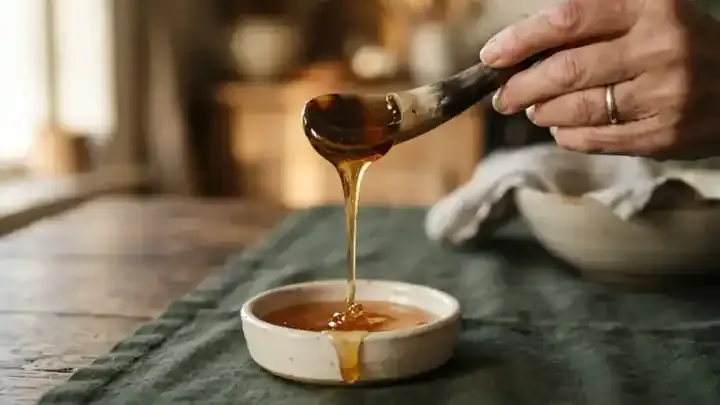
At bedtime, the third, and this is the one that matters to me. I take it with Grandpa's horn spoon, sitting on the edge of the bed, and I let it rest on my tongue a moment before swallowing, the way he did.
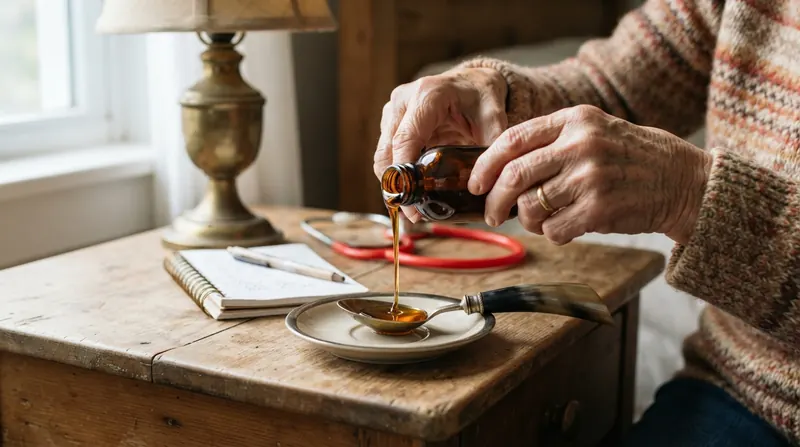
The taste, since everybody asks. It's honey first, thick and floral, and then the eucalyptus and anise come up behind it like opening a tin of old-fashioned hard candy.
There's a faint green, herby note at the very end, which I think is the thyme. Bernie's Lyle is right: it tastes like a Christmas kitchen.
It's thick, thicker than a cough syrup from the drugstore and thinner than straight honey. It coats the back of the throat, and that coating is really the whole sensation.
The seller says refrigeration isn't required, "because this product contains honey." I keep it in the cabinet next to the spoon, tightly capped, the way the label says.
A Syrup Is Not an Inhaler, and a Spoon Is Not a Checkup
In thirty-one years in a health office, the most important thing I ever told a parent was what something was not. So here's my list for this bottle.
It isn't an inhaler, and it isn't a substitute for anything your clinician has given you for your chest. If you have something from your clinician, keep using it exactly as they told you.
It isn't a checkup. If your breathing has changed, if you're short of breath at rest, or if a cough has lasted more than a few weeks, that's an appointment, not a bottle.
It isn't sugar-free. It's mostly honey, as we covered.
If you count carbohydrates, count these.
It isn't for pregnancy or nursing, in the seller's own words: "Not for use during pregnancy or lactation."
It isn't for small children. The label says not for children under six, and half a teaspoon for ages six to eleven.
Honey is never for babies under one year, a rule every school nurse can recite with her eyes closed.
And the seller's own line, which I'd underline if I were the label printer: if you have a medical condition or take anything daily, it asks you to "please consult with your healthcare practitioner before use."
- You want a promise about your breathing; nobody honest can give you one, and the seller's FDA line says so
- You're counting sugar closely and haven't decided where three teaspoons of honey fit
- You're expecting or nursing, or it's for a child under six
- You dislike licorice-candy flavors (anise is in it) or eucalyptus
- Your breathing has changed recently and you haven't seen anyone about it yet
How Long a Bottle Lasts, and What a Teaspoon Costs
The bottle doesn't print a number of servings. So I did the arithmetic that a bookkeeper or a school nurse would do with a new bottle of anything.
The bottle holds 5.4 fluid ounces, which the label also prints as 160 milliliters. A measuring teaspoon is five milliliters, so the bottle holds about 32 level teaspoons.
At the label's three teaspoons a day, one bottle lasts about ten or eleven days. I want to be very clear about that, because it surprised me: this is not a month in a bottle.
In my own notebook, I kept to the label's three for the first two weeks. After that, I'll tell you honestly what I did in the diary section, and it wasn't always three.
The price on the seller's page was $26.09 for the bottle when I checked in October 2026. Divided by about 32 teaspoons, that's roughly 82 cents a teaspoon.
The seller offers a "Subscribe & Save" option at fifteen percent off, with free US shipping and "Cancel Anytime." That brings a teaspoon to about 69 cents.
I didn't subscribe. I bought single bottles, because I wanted to be free to stop the moment the notebook said it wasn't worth it, and I recommend the same to anyone starting.
Dana, quick one. Honey syrup with plantain, elecampane, mullein, thyme, eucalyptus, anise, lemon. Any reason I shouldn't?
4:02Nothing in that list jumps out for you. Bring the bottle Thursday and I'll check it against your list properly.
4:20I'll bring the bottle and my notebook.
4:21Of course you will. Ms. Tillman, you taught my son to blow his nose. Bring the cookies too.
4:22I did bring the bottle on Thursday, and Dana checked it against everything I take. If you take anything daily, do the same before the first teaspoon; it costs nothing and takes five minutes.
A Farm in North Carolina, a Phone Number That Rings
The last thing I check on any bottle is the one that tells you the most: who made it, and whether a human being answers when you call.
Gaia Herbs prints a street address, 184 Butler Farm Road in Mills River, North Carolina, and a phone number, 1.800.831.7780. The bottom of their shop says their farm is in Brevard, North Carolina.
I checked that the number and the address match in three places: the seller's contact page, its privacy policy and the bottle itself. They do, and that's more than I can say for a lot of bottles that come through a lunchbox.
In my experience, a company that prints where it lives and how to reach it is a company that expects to be called. That's the right kind of expectation.

The listing shows the USDA Organic seal and says the syrup is Non-GMO Project Verified, gluten-free, dairy-free and soy-free. None of that is evidence of anything for your chest, but it tells you something about the care.
The label says "herbal supplement," and the seller's page carries the standard statement that its claims haven't been evaluated by the Food and Drug Administration. That's the honest category for a bottle like this.
Five Things I Check on Any Bottle
Parents used to bring bottles into my office in lunchboxes, in backpacks, once in a cereal box. Over the years I built a little checklist, and I've used it on every bottle since.
One: read the back before the front. The front of a bottle is an advertisement.
The back is the part a company can be held to, and it's where the real list lives.
Two: count the ingredients you can't picture. If more than half the list needs a dictionary, I slow down.
This bottle has ten lines, and I could picture every one, from the honey to the lemon.
Three: find the asterisk. Every claim about a supplement in this country should have one, pointing to the line that the Food and Drug Administration hasn't evaluated it.
If the asterisk is missing, that tells you something too.
Four: do the arithmetic. How much is in the bottle, how much is a serving, how many days, how much per day.
This bottle doesn't print a serving count, so I did it myself: about 32 teaspoons, about eleven days at the label's dose.
Five: find the address and the refund. A company that prints a street and a phone number is a company that expects to be called.
A company that writes a clear refund policy is a company that has thought about your bad day as well as its good one.
This bottle passed all five. That's not the same as saying it'll do anything for your chest, and I want to keep those two things very separate.
Passing the checklist means it's honest. It doesn't mean it's powerful.
In thirty-one years, I learned that honest is the rarer of the two.
What Other Buyers Wrote, Good and Bad
The seller's page shows a rating of 4.8 out of 5 from 296 reviews, and says that 95 percent of reviewers would recommend it. Those are the seller's own numbers.
I read the most recent ones the way I'd read notes from parents: looking for the plain ones and the unhappy ones, because those tell you the most.
Here are two of them, exactly as written. The portraits beside them are illustrative, not the actual reviewers.

My husband takes this every day
Six words. I laughed when I read it, because it's Bernie's sentence almost exactly, about a different husband in a different kitchen.

Product from Italy much better
I'm including Sarah's one-star review on purpose. Her headline was "Not as good as the original," and she prefers a syrup she'd had from Italy.
A review page with only five-star reviews is a review page I don't trust. One unhappy buyer with a clear preference is useful information, and I'd rather you heard it from me.
I also want to tell you what I left out. A few reviews on that page name a specific condition, and I don't quote those, because one person's chest is not evidence about anyone else's.
One plain review and one unhappy one tell you more than fifty that sound alike.
What I can tell you is what three kitchens say. Lyle takes it every day, Jo's husband takes it every day, and I took it for twelve weeks with a notebook open beside me.
Twelve Weeks of Sticky Notes, Week by Week
Here is the notebook, honestly. I'm giving you the dull weeks along with the good ones, because a notebook with only good weeks in it is a brochure.
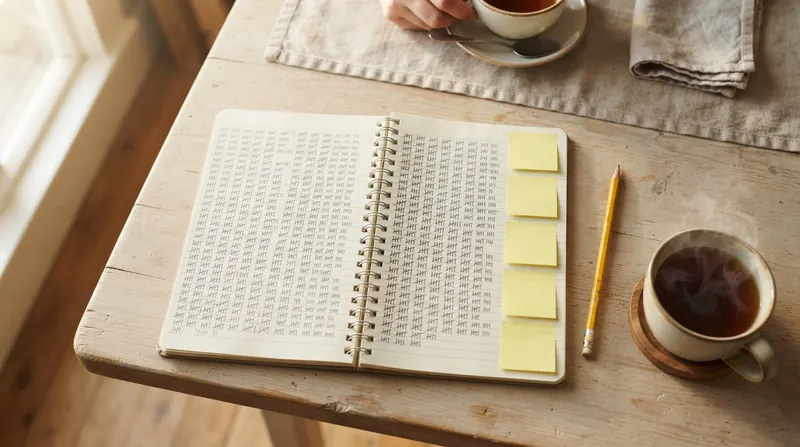
I kept four columns, the same every morning: the throat-clearing count before coffee, the cellar stairs, the whistle, and one line about the night before.
I also kept walking every day, as Renata asked. That matters, and I'll come back to it, because it means I can't tell you which thing did what.
Corinne's chest notebook, March to May
- Week 1Three teaspoons a day, Grandpa's spoon at bedtime. Throat-clearing before coffee: 6, 5, 6, 7, 5. Stairs: stopped at step 6 every day. Whistle: 4.5. Walked to the end of Walnut Street four days of seven.
- Week 2Nothing. Same counts, same stop on step 6, same whistle. Wrote "nothing" four mornings in a row and nearly gave the bottle back to Bernie.
- Week 3First margin note: "didn't notice the bedtime tickle." Clearing count 4 two mornings. Walked with Gene to the post office and back, his old route, three times.
- Week 4Theo brought home a sniffle from second grade and shared it generously. Counts went up for five days and I wrote down every one of them.
- Week 6Clearing before coffee: 3 or 4 most mornings. Took the lunch teaspoon only half the days and wrote that down too. Stairs: one stop, at step 10 instead of 6. Whistle: 5.
- Week 9Second bottle ran out on a Friday; four days without before Bernie brought another. The bedtime tickle came back two nights of four, or I was listening harder. I can't tell which.
- Week 12Back to Renata with the notebook in my cardigan pocket. Walking every day. Whistle: 6 seconds on a good morning.
Week two is the week most people quit things. It's the week when you've done everything right and the notebook says "nothing" four days in a row.
In the health office, I used to tell parents that week two of anything is a lie. It's not proof that something isn't working, and it's not proof that it is.
It's just week two.
Week three was the first small thing. I wrote "didn't notice the bedtime tickle" in the margin, and then I underlined it, and then I crossed out the underline because one night is one night.
Week four, Theo's sniffle. Every count went up for five days, as it would have in any year of my life.
I wrote them all down, because a notebook that skips the bad days is worse than no notebook.
Week six is where I'd point if you asked me what changed. The morning clearing count was three or four most days instead of six.
The stop on the stairs moved from step six to step ten.
And here's the honest part of week six. I was also walking every day by then, a mile most mornings, and Gene and I had started taking his old mail route on Saturdays.
So was it the walking, the moist air, the honey, the herbs, the spring weather, or just paying attention? I spent three decades telling parents the truth, and the truth is I don't know.
I'm not going to draw you a chart of my tally marks. Pencil marks from one kitchen aren't data, and I've seen too many advertisements dress them up as if they were.
Week nine, the empty bottle. I'd been slow to reorder, and there were four days without.
Two of those nights, the tickle at bedtime came back, and two nights it didn't.
I'd love to tell you that proves something. It doesn't.
Four nights is four nights, and I was certainly listening for it harder than usual.
What I can tell you is that I missed the spoon. Not the syrup, exactly.
The minute at the edge of the bed with Grandpa's spoon, the taste of honey and anise, and the quiet.
Renata Reads the Notebook
In week twelve, I went back to Renata with the notebook, the way she asked. She read every page, slowly, turning them the way I used to turn a child's file.
Then she listened again, front and back, deep breath, again. She warmed the bell in her palm first, as always.
"Still clear," she said. "Same as January.
Your color's better, and you came up the front steps without holding the rail. I watched you from the window."
I told her about the syrup, and Bernie, and Grandpa's spoon. She asked me to read her the label, and I did, line by line.
"Honey, thyme, mullein," she said. "Nothing there I'd argue with for you.
Keep the walking; that's the part I'd bet on. And keep the notebook."
She didn't say the syrup did anything, and she didn't say it did nothing. She said exactly what an honest clinician should say about a teaspoon of honey and herbs, and I wrote it down.

So here's what twelve weeks of a notebook says, in a nurse's plain words. My chest sounded clear in January and still sounded clear in May.
My mornings were quieter, and the stairs were easier.
I walked every day, kept a pan of water on the radiator, and took a teaspoon of honey syrup with herbs three times a day, most days. And I paid attention, for the first time in years.
I'm keeping all of it. The walks are the part I'd keep if I could only keep one.
The spoon is the part I'd miss the most.

Theo listened again in May, with the same red stethoscope. He frowned, moved the bell around, frowned again, and announced his findings.
"You don't sound like the radiator anymore," he said. "You sound like the refrigerator."
I've decided to take that as a promotion.
Theo's Saturday Rounds
Somewhere in April, Theo turned the red stethoscope into a Saturday ritual. He comes over with his mother at ten, and before he takes off his shoes he does what he calls "rounds."
Rounds means he listens to everybody in the house. Gene, me, the cat, the refrigerator and, once, the toaster, which he said "sounds tired."
Then he asks for the notebook. He can't read my handwriting, but he likes to put a sticker next to the day's numbers, a gold star if I didn't stop on the stairs and a dinosaur if I did.

By the end of April, the stars outnumbered the dinosaurs. Theo was very proud of this, and took full credit, and I let him.
His mother, my daughter Ellen, asked me one Saturday whether I really thought the syrup was doing anything. She's a bank teller, and she asks questions the way I taught her to: plainly.
I told her the truth. "I don't know what the syrup is doing," I said.
"I know what the walking is doing, and I know what the notebook is doing. The syrup is the part I look forward to."
She thought about that and said, "So it's like Grandpa Amos's spoon." Yes, exactly like that: a small, warm, honest thing at the end of the day.
Saw you and Gene go by at 7 again. That's three weeks straight. Who are you and what did you do with Corinne
7:31Nurse's orders. Want to come Saturday? We do Gene's old mail route.
7:34Only if we stop at the bakery on Chestnut
7:35Deal. Bring a pencil. I'll explain the notebook on the way.
7:36What Readers Wrote Back
When a shorter version of this column ran in our church newsletter, I got more letters than I've ever gotten about anything, including the year I wrote about head lice.
Those letters are composites of what readers wrote, and the names are changed. But Ray from Zanesville is right about the eleven days, and I wish I'd known it before my first bottle.
Two Sisters-in-Law, One Bottle and a Spiral Notebook
In June, the church newsletter asked whether Bernie and I would record a conversation for its audio page. We did it at my kitchen table, with the bottle and the notebook between us.

Neighbors · The Kitchen Table Tapes, Episode 7
A School Nurse, Her Sister-in-Law and a Honey Spoon
Corinne
host
Bernie, the newsletter wants to know why a paint-counter lady showed up at a retired nurse's house with a bottle of syrup and a sticky note.
 Bernie
guest
Because Gene called me and said you'd stopped on the cellar stairs again. And because you'd never once in forty years let anybody take care of you. I figured a bottle was sneakier than a lecture.
Corinne
host
You know I read the back first. Honey, four plants, three oils. I'll admit I was looking for something to complain about, and the only thing I found was that the seller says it doesn't contain sugar.
Bernie
guest
And I told you, it's honey, Cor. Lyle's mother put honey on everything, including him. He says it tastes like her kitchen at Christmas, and at seventy-three, that's worth eighty cents a spoon to him by itself.
Corinne
host
Week two I wrote "nothing" four days running. I almost brought it back to you at Sunday dinner. What would you have said?
Bernie
guest
I'd have said what you used to say to my kids when they wanted to quit piano in October. "Week two is a liar." You said that to Tommy in 1986 and he still says it to his own kids.
Corinne
host
So what would you tell somebody listening who has a tight chest in the morning and a cellar full of stairs?
Bernie
guest
Get your chest listened to by somebody with a real stethoscope first, not a seven-year-old. Then walk. Then, if you want a spoon of something nice at bedtime, read the back of the bottle like Corinne does and write it down. In that order.
Bernie listened to the recording afterward and asked for one correction. She wanted it on the record that she has never been "sneaky," only "efficient," which Gene disputes.
I've gone back to that last answer of hers more than any other. Get listened to, then walk, then the spoon. In that order.
If You're Thinking About a Bottle of Your Own
If you've read this far, you're probably wondering whether to try it. I'm not going to tell you that you should, but I'll tell you how I'd decide if I were sitting at your kitchen table.
- Your mornings have a pattern you'd like to change: a tickle, a throat-clearing count, a stop on the stairs
- Somebody with a real stethoscope has listened to your chest recently and said it sounds clear
- You'd like a warm, slow minute at bedtime with a spoon, not something to swallow with water
- You like honey, anise and eucalyptus, the old-fashioned candy-tin smell
- You'll actually keep a notebook and take it to your next appointment
If those fit you, the next step is simple. Here are the numbers in one place, before the button.
5.4 fl oz bottle · about 32 teaspoons · read the refund terms before ordering
The Refund Terms, in Plain Words
Before anybody in my family buys anything, I read the refund terms out loud. It's a habit from forty years of reading permission slips before signing them.
Here is the seller's satisfaction guarantee as its product page describes it. If you aren't happy with a product bought directly from them, "just reach out we'll make it right with a full refund."
Two details matter. The 45 days start from the ship date, so the clock is already running when the box is on the truck.
And it applies to purchases made directly from the seller, not from another store.
At three teaspoons a day, a bottle lasts about eleven days. So within 45 days you can finish one bottle, decide, and still be well inside the window, which is exactly how I'd use it.
A refund policy is the one paragraph a company writes about its own worst day. This one is short and plain, and I respect that.

Short answers to the questions Bernie gets at Sunday dinner
How do you take it?
Per the label, adults and children 12 and up take one teaspoon three times a day; ages 6 to 11 take half a teaspoon up to four times a day; it's not for children under 6. Shake well first. I use a measuring teaspoon, and Grandpa's spoon at bedtime.
What does it taste like?
Honey first, then eucalyptus and anise, with a faint herby finish from the thyme. It's thick and it coats the throat. If you dislike licorice-candy flavors, you may not like it.
Is it sugar-free?
No. The main ingredient is organic honey, and honey is sugar. The seller's page lists "Sugar" under "Does Not Contain," which we read as "no added cane sugar"; count the honey if you count carbohydrates.
How long does a bottle last?
The bottle is 5.4 fl oz (160 mL), about 32 level teaspoons. At the label's three a day, that's about ten or eleven days. The seller doesn't print a serving count; that's our arithmetic.
Does it need to be refrigerated?
The seller says refrigeration isn't required because it contains honey; keep it tightly sealed in a cool, dry place.
Will it change my breathing?
Nobody honest can promise that, and the seller's page carries the FDA statement saying its claims haven't been evaluated. The research on its herbs is mostly traditional use and small studies, and none of it tested this bottle.
Can I take it with what my clinician gave me?
Show the bottle to your pharmacist and tell your clinician before the first teaspoon. The seller says the same: if you have a medical condition or take anything daily, consult your healthcare practitioner before use.
Can I take it if I'm pregnant or nursing?
The seller says it's not for use during pregnancy or lactation.
Is it organic?
The listing shows the USDA Organic seal, and each herb and the honey on the label are listed as organic. The listing also says it's Non-GMO Project Verified.
Who makes it, and how do I reach them?
Gaia Herbs, 184 Butler Farm Road, Mills River, North Carolina 28759. Phone 1.800.831.7780 (customer support is option 2, weekdays 7:30 AM to 6 PM Eastern); email [email protected]. The seller notes that its support agents are not health professionals and can't give medical advice.
What if I don't like it?
On direct orders, the seller offers a full refund if you request it within 45 days of the ship date. Read the full Satisfaction Guarantee page before ordering.
What I'd Tell You at the Kitchen Table
I spent thirty-one years telling parents the truth in a small room with a cot. So here's what I know about this bottle, in the plainest words I have.
It's a teaspoon of organic honey with four old plants and three oils, made by a company that prints its address and its phone number. The research on those plants is real, old and small.
It won't do the walking for you. It won't replace somebody with a real stethoscope listening to your back.
And it isn't sugar-free, whatever the seller's page says.
What it gave me was a reason to stop pretending, a minute at the edge of the bed, and my grandfather's spoon back in my hand. For eighty-two cents a teaspoon, that's a trade I'm glad I made.
Check availability and today's price on the seller's own page
P.S. Bernie's sticky note is still on the inside of my medicine cabinet door, next to Grandpa's spoon in its juice glass; if you have a Bernie in your life, thank her, and if you are the Bernie, bring the bottle anyway.
P.P.S. Remember the order Bernie said on the tape, get listened to, then walk, then the spoon: the spoon is the smallest of the three, and it's the only one that comes in a bottle.
The full ingredient guide, with a note on each herb and oil on the label and on reading the advertising around this bottle, is linked at the foot of this page.